All You Need To Know About The Workings Of Water To Water Heat Exchangers
All You Need To Know About The Workings Of Water To Water Heat Exchangers
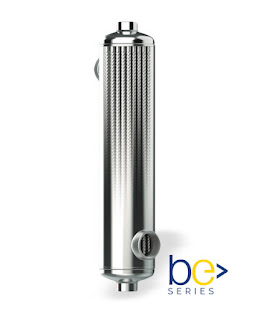
Heat exchangers work by enabling the warmer fluid to connect ( directly or indirectly ) with a lower-temperature liquid. The process allows the heat to travel and attain balance. This convection results in a drop in the hotter fluid temperature level while increasing the same for the cooler one. The basic principle behind the working of Water To Water Heat Exchangers is that the heat is transferred without moving the heat-carrying material.

Heat Exchanger Construction
Heat exchangers are generally made from metallic compounds, but they can also be constructed out
of ceramics, composite materials, or even plastics. Ceramics are primarily utilized for the applications requiring excessively high temperatures (over 2000 ° F)— where metals such as copper, iron, and steel can give in and melt. Ceramics are also sometimes used to carry the fluids which are eroding and abrasive due to their chemical compositions.
Speaking of plastics; they are light-weight and cheaper in comparison to metals, defy deterioration, and may have good thermal conductivity too. However, they might appear to be functionally inferior to their counterparts.
Water To Water Heat Exchanger Working
The residual heat from waste-water is used by the heat exchanger to pre-heat incoming freshwater— Freshwater flows in and propagates across the warmer waste-water; the latter drains out eventually.
Here's how it works:
The waste-water channels the thermal energy through the inner walls to the freshwater, heating it to more than
100o F, while simultaneously cooling the waste-water as it leaves the container. There are different types of Water To Water Heat Exchangers, the
two most popularly used variants are:
referred to as a shell.
2)Plate Heat Exchanger: It consists of numerous thin, fluted plates bundled together.
To know more about the composition and working of Water To Water Heat Exchangers, visit us
now at https://aicheatexchangers.com.

Comments
Post a Comment