The Ultimate Guide to Understanding Shell and Tube Heat Exchangers
Do you want to finally understand shell and tube heat exchangers instead of floundering in the dark? Stop right there! This comprehensive manual will teach you all you need to know about these crucial parts' function, construction, and upkeep. Your level of experience in the engineering field will remain the same as you will come away from this resource with a firm grasp of shell and tube heat exchangers. So unwind, settle in, and get ready to learn everything there is to know about a vital piece of machinery in your facility.

What is a Shell and Tube Heat Exchanger?
Shell and tube heat exchangers are commonplace in every manufacturing environment where the process fluid has to be chilled or heated. The advantages of shell and tube heat exchangers are:
● Low production costs.
● Independence from external energy sources.
● High dependability over the long term owing to the absence of moving components.
As shell and tube heat exchangers may be used with either liquids or gases, they have various potential uses. Heat exchanger discussions must consider that a "fluid" might be either a gas or a liquid. It is incorrect to refer to a heat exchanger as a cooler because it may also be used to heat the process fluid.
How do Shell and Tube Heat Exchangers Work?
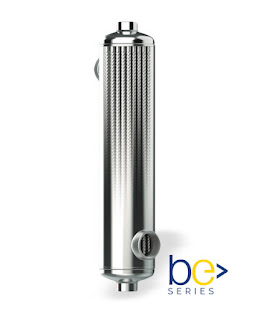
Straight or U-shaped tubes or tube sheets are bundled inside a shell or casing to create a shell and tube heat exchanger. Metals, including stainless steel, copper, and titanium, are commonly used for the shell and tubes, while plastic and ceramic are also viable alternatives. Process fluid (also known as main fluid) travels through the tubes, while heat transfer fluid (secondary fluid) circulates the tubes in the shell to transmit or absorb heat.
The tubes' walls serve as both a barrier to separate the two fluids and a pathway for the heat to go between them. Many variables affect the heat transfer coefficient, which measures the heat transfer rate per unit of surface area and temperature differential between the two fluids. These include the fluid velocities, fluid characteristics, tube diameters, and tube designs. Heat exchanger efficiency is quantified by the rate at which heat is transferred between the two fluids, which is a function of the heat transfer coefficient, the surface area of the tubes, and the temperature differential between the fluids.
To Wind Up
We hope this guide has helped provide you with an understanding of shell and tube heat exchangers. While these units can seem complex initially, taking the time to understand them will be worthwhile for anyone looking to take their engineering skills to the next level. With this information, you should now have a better appreciation for how shell and tube heat exchangers work and why they are such a popular choice among engineers worldwide. AIC Heat Exchangers is the best option.

Comments
Post a Comment