A Comprehensive Guide On Water to Water Heat Exchanger
Water to water heat exchanger is the most efficient, economical, and environmentally friendly method of heating a home. It is also known as a whole house water boiler, and it can be installed under a ground floor or basement on all houses unsuitable for natural gas. A Water-to-Water Heat Exchanger system allows you to heat water directly from your hot water supply and use it for space heating.
.jpg)
Defining Water to Water Heat Exchanger
Water heat exchangers warm incoming freshwater by using the latent heat from wastewater. A water heat exchanger is a device that passes cooler freshwater through warmer wastewater.
The wastewater cools down as it leaves the unit. At the same time, the freshwater is heated to temperatures much beyond 100 degrees Fahrenheit, thanks to the heat transferred from the wastewater via the unit's internal walls. Heat transfer from one body of water to another may be accomplished using a variety of heat exchanger designs. Shell-and-tube and plate heat exchangers are two popular designs.
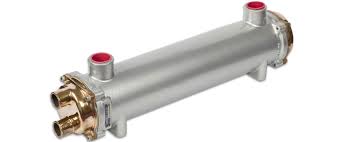
One or more tubes (i.e., a tube bundle) are built into the shell of a cylindrical pressure tank to transfer heat (i.e., shell). The smaller pipe or tubes carry one fluid, while the larger tubes inside the sealed shell carry the second fluid around the exterior and between them.
Finned tubes, single or two-phase heat exchange, countercurrent or concurrent flow, crossflow topologies, and single, double, and multiple pass configurations are more design features.
How Does a Water-to-Water Heat Exchanger Work?
A water-to-water heat exchanger is a device that allows you to use hot water from your furnace or boiler. You can use this hot water for other purposes, such as showers or washing dishes.
A typical water-to-water heat exchanger consists of an inner chamber and an outer chamber. The inner chamber contains the heating element, which provides heat energy to the outer chamber. The outer chamber is filled with cold water and contains an overflow pipe that leads out of the room where you want to install your heat exchanger.
The outer chamber has two ports: one connects directly to your hot water supply line and the other to your drain pipe. When there's no flow through either port, no energy is transferred from one source to another; therefore, the device does no useful work!
Application of Water to Water Heat Exchangers
There is a wide range of commercial and industrial applications for water-to-water heat exchangers, from heating household hot water to radiant floor heating, melting snow, and even solar heating. In breweries, they may be used for wort cooling and in HVACR (heating, ventilation, air conditioning, and refrigeration) systems.
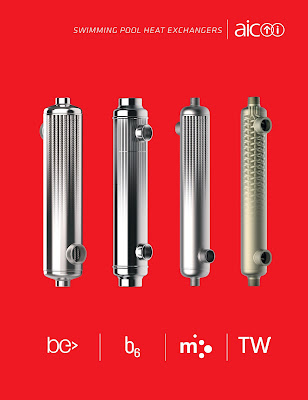
● Swimming pool heating and other maritime applications are common for shell and tube heat exchangers. You may save your water heating costs by as much as 80% with their help.
● Water-to-water exchangers may cool wastewater at commercial and industrial enterprises that drain their effluent into municipal sewers. They may chill the waste without adding ice water to the solid waste by installing a heat exchanger.
● Energy-saving showers may have a heat exchanger installed near the drain to transfer heat from the water. The heat exchanger's copper coils are in direct contact with the water as it trickles down the plug.
● Meanwhile, cold water being pumped into the shower to be heated helps boost through the same coils, avoiding mixing with the filthy water but taking up a portion of its waste heat.
The Bottom Line
Water-to-water heat exchangers are used widely by industries to treat the cool wastewater produced during their manufacturing process. Hence, these AIC Heat Exchangers have much more than every user should know. Here in this blog, we have highlighted the major things a person should know about water-to-water heat exchangers.
Comments
Post a Comment