Functioning, Purpose, and Advantages of Marine Heat Exchangers
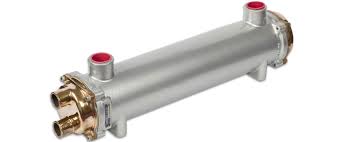
Heat exchangers found on ships are known as marine heat exchangers. Many systems make use of heat exchangers onboard vessels. Lube oil, jacket water, steam systems, and main seawater are all systems that require heat exchangers. Heat exchangers are frequently used to link the systems to remove heat generated by running equipment from the engine room. Plate and shell and tube marine heat exchangers are the two most common types of marine heat exchangers used on board ships in the maritime sector.

Functioning of Marine Heat Exchangers:
Marine Heat exchangers are the most popular approach to cool a boat's engine by using
the water in the lake, river, or ocean in which the ship floats. The water-antifreeze combination passes through the Heat Exchanger, discharging heat while remaining separate from the corrosive salts and chemicals in the water in which the boat is floating. Heat is subsequently transported from the water-antifreeze combination to ocean (or lake or river) water, which flows through a Heat Exchanger. Because this water might be corrosive, the engine could be cooled with a sealed combination of distilled water and antifreeze. If the ocean water corrodes and destroys the Heat Exchanger, it may be replaced for a fraction of the cost of rebuilding the engine.
the water in the lake, river, or ocean in which the ship floats. The water-antifreeze combination passes through the Heat Exchanger, discharging heat while remaining separate from the corrosive salts and chemicals in the water in which the boat is floating. Heat is subsequently transported from the water-antifreeze combination to ocean (or lake or river) water, which flows through a Heat Exchanger. Because this water might be corrosive, the engine could be cooled with a sealed combination of distilled water and antifreeze. If the ocean water corrodes and destroys the Heat Exchanger, it may be replaced for a fraction of the cost of rebuilding the engine.
The primary working principle of a marine heat exchanger is that the marine heat exchanger must be resistant to erosion or corrosion induced by seawater. It implies that materials that come into contact with saltwater must be acceptable.
Purpose of Marine Heat Exchangers:
These heat exchangers have various uses due to their outstanding efficiency, making them
multi-beneficial. Let us look at a few of them:
● Water boats are one of the most common uses for marine heat exchangers. They are utilized to cool the engine and are an essential component.
● They give the best solution as gear oil coolers. So, their value in the automotive industry is paramount.
● Furthermore, these heat exchangers are commonly used to cool hydraulic fluid, lubricating oil, and fuel, and they are the most practical diesel fuel return coolers.
Benefits of Marine Heat Exchangers:
When you grasp their benefits, you can see why maritime heat exchangers are critical. Take a look at some of the most significant benefits of heat exchangers:
● They are enormous and can meet the need for massive amounts of hot water.
● Marine heat exchangers may be easily customized. Thus, they are an excellent complement to any cold water system.
● The marine heat exchangers are of the highest quality and will provide you with the optimum hot water possible.
● You can select one from a variety of marine heat exchangers available.
● Marine heat exchangers are often reasonably priced. Consequently, they will never be an expense, no matter what size you choose.
Conclusion:
The utility of marine heat exchangers and their diverse applications in industrial purposes is projected to drive higher demand. Therefore, quality, durability, and cost-effectiveness are vital considerations. It is recommended that you invest in marine heat exchangers from a company that offers complete heat transfer solutions to the global market.

Comments
Post a Comment